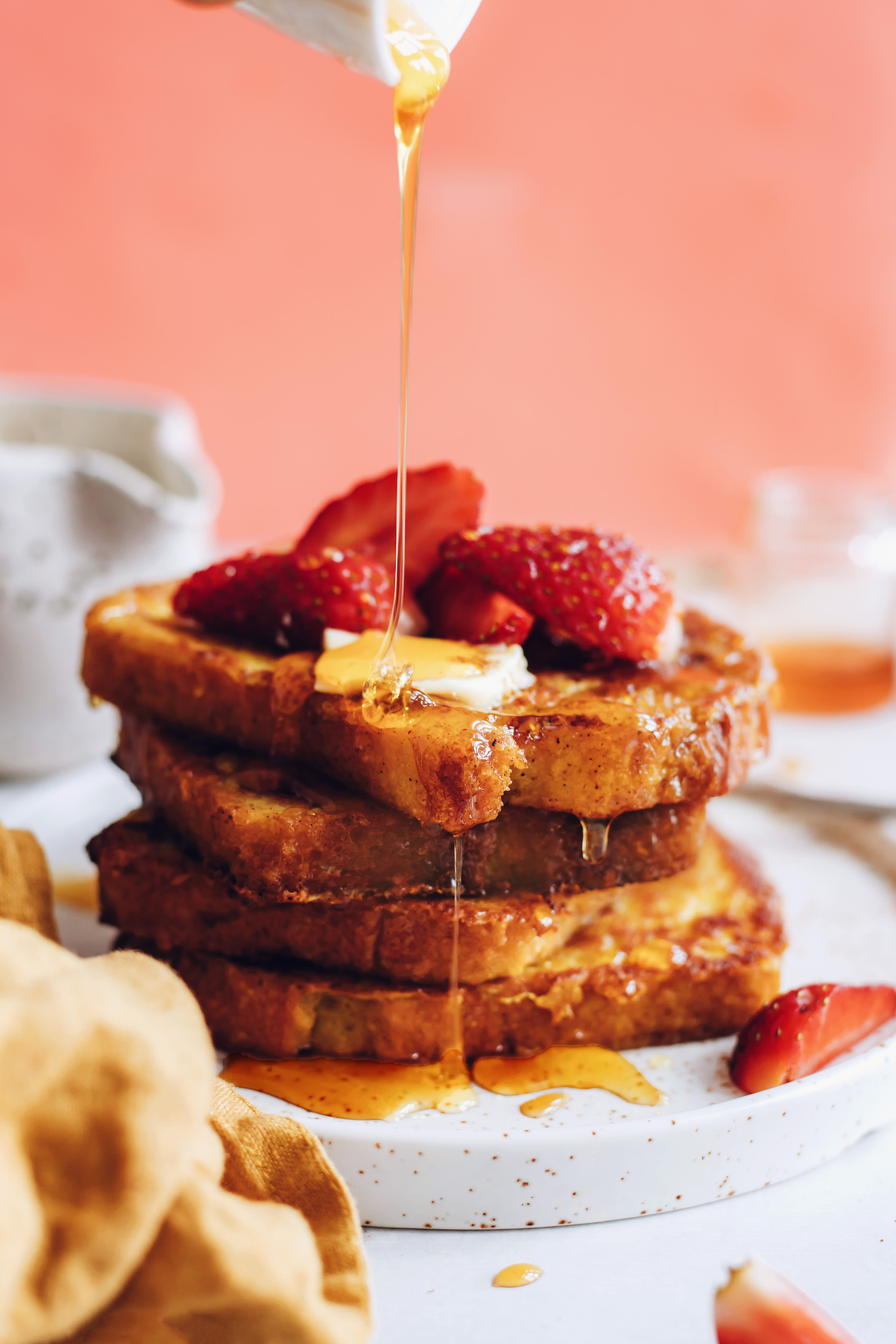
Imagine waking up to the irresistible aroma of French toast, knowing it's not only incredibly delicious but also made with just 5 simple ingredients and entirely plant-based. No eggs, no dairy, just pure, unadulterated breakfast bliss that comes together in a flash. This isn't a dream; it's the reality of our Fast & Easy Vegan French Toast recipe, designed to deliver incredible taste without the fuss.
For too long, the idea of truly delicious vegan french toast felt like a culinary unicorn – elusive and often disappointing. But those days are over! We've cracked the code to creating a plant-based version that boasts the perfect crisp edges, a luscious, custardy interior, and a flavor profile so authentic, even the most devoted traditionalists won't be able to tell the difference. In fact, if my husband's reaction is any indication – he devoured it in mere minutes, exclaiming, "My father used to make this for me all the time!" – you know you've hit breakfast gold.
This recipe isn't just good for a vegan option; it's genuinely the best vegan french toast recipe you'll find, period. It’s a testament to how far plant-based cooking has come, proving that you can achieve classic comfort food tastes with everyday ingredients. Get ready to elevate your morning routine!
Why This 5-Ingredient Vegan French Toast Will Become Your Go-To Breakfast
So, what makes this particular vegan french toast recipe stand head and shoulders above the rest? It boils down to a few key, undeniable factors:
- Effortlessly Easy: With only 5 common ingredients, the prep work is minimal, making it perfect for busy mornings or impromptu brunch cravings. You won't need a specialty store trip for this one!
- Lightning Fast: From mixing the batter to golden-brown perfection on your plate, this recipe is incredibly quick, meaning less time in the kitchen and more time enjoying your meal.
- Explosively Flavorful: Each bite is a symphony of sweet, warm vanilla notes, perfectly absorbed by the bread and creating an experience that is anything but bland.
- Visually Stunning: This isn't just tasty; it's gorgeous. Achieving that beautiful golden crust makes for a truly appealing breakfast, ready for your favorite toppings.
The magic here is in the texture. Forget soggy bread or crumbly pieces; this vegan french toast delivers that ideal contrast of a slightly crisp exterior giving way to a soft, chewy, and utterly satisfying custard-like center. It's the kind of texture that makes you close your eyes and savor every mouthful. And yes, for those wondering, it's completely free of eggs and dairy, making it suitable for a wide range of dietary needs. Plus, with the right bread choice, it's easily adaptable for a gluten-free diet too! For more tips on achieving that perfect balance, check out our guide on Best Vegan French Toast: Crispy, Custardy, Tastes Like the Real Thing.
The Secret to Perfection: Key Ingredients for Your Vegan French Toast
Given the incredibly short ingredient list, every component plays a starring role in the success of this vegan french toast. There's not much room for substitutions if you want optimal results, but understanding the purpose of each will help you appreciate the simplicity and genius of this recipe.
The Star: Stale, Sturdy Bread
This is arguably the most critical component, and it's a secret known to French toast enthusiasts worldwide, vegan or not. The very origin of "French toast" as "pain perdu" (lost bread) highlights its purpose: to resurrect day-old or stale bread. Why is stale bread so important for your vegan french toast?
- Superior Absorption: Dry bread acts like a sponge, eagerly soaking up the rich, custardy batter. Fresh bread, with its higher moisture content, simply won't absorb as much, leading to a less flavorful and less "custardy" result.
- Structural Integrity: Stale bread is firmer and less prone to falling apart. When soaked in batter and then cooked, it holds its shape beautifully, preventing soggy, crumbly mishaps.
So, what kind of bread should you choose? Aim for thick slices of:
- Sourdough Bread: Its sturdy crust and open crumb make it excellent for absorbing batter and holding up to frying.
- French Bread (Baguette): A classic choice, providing a good balance of crust and soft interior.
- Hearty Rustic Italian Bread: Similar to sourdough, these artisanal loaves offer great texture and flavor.
- Vegan Brioche: If you can find it, a day-old vegan brioche will make for an exceptionally rich and decadent French toast. Ensure it's not fresh and slice it thick!
What to Avoid: Steer clear of overly soft, thin, or very fresh breads like standard plain white bread or typical sandwich slices. These will likely disintegrate or become a soggy mess when introduced to the batter. While whole wheat bread can work, ensure it's a hearty, dense loaf that you can slice thickly yourself, as pre-sliced thin whole wheat often lacks the necessary robustness and can be less flavorful than white varieties.
A Note on Gluten-Free Bread: Making vegan french toast with gluten-free bread can be tricky because the absence of gluten can make it more fragile. However, success is absolutely possible! Opt for a sturdy, rustic gluten-free loaf, such as a gluten-free sourdough, and make sure your slices are extra thick. A pro tip: lightly toast your gluten-free bread slices before soaking them in the batter. This helps dry them out further and gives them a better chance of holding up during cooking. For an even deeper dive into this vital component, read Unlock Perfect Vegan French Toast: Stale Bread & Flaxseed Secrets.
The Vegan Custard Base: Flaxseed Magic
The true genius of this vegan french toast lies in its custard-like batter, which perfectly mimics the texture and richness of traditional egg-based versions. The secret to this plant-based alchemy? Flaxseed meal (or ground flaxseed).
When mixed with liquid, ground flaxseed creates a gelatinous, binding agent commonly known as a "flax egg." In this recipe, it serves as the foundation for our Unlock Perfect Vegan French Toast: Stale Bread & Flaxseed Secrets custardy batter, providing the essential thickness and adhesion that allows the batter to cling beautifully to the bread. This prevents the batter from simply soaking straight through and leaving you with a watery, uninspired piece of toast.
Along with the flaxseed meal, your other key "custard" ingredients are:
- Plant-Based Milk: Unsweetened varieties like soy milk, almond milk, or oat milk work wonderfully. Each offers a slightly different flavor profile; oat milk tends to be particularly creamy.
- Sweetener: A touch of maple syrup, agave nectar, or granulated sugar adds the perfect sweetness. Maple syrup also contributes a lovely depth of flavor.
- Vanilla Extract: Essential for that classic, comforting French toast aroma and taste. A generous splash makes all the difference!
These simple ingredients, when combined with the power of flaxseed, transform into a rich, flavorful batter that will cling to your bread, ready to be cooked into breakfast perfection.
Mastering the Flip: Tips for Crispy, Custardy Vegan French Toast
You’ve got your perfect bread and your magical flaxseed custard; now it’s time to cook your vegan french toast to perfection. The cooking process is just as crucial for achieving those coveted crisp edges and soft, custardy centers. Here's how to master the flip:
- Preheat Your Pan: Don't rush this step! A properly preheated pan (a griddle, cast-iron skillet, or non-stick pan works best) ensures even cooking and prevents sticking. Medium-low heat is generally ideal.
- Grease Generously: Use a bit of vegan butter, coconut oil, or a neutral high-heat oil (like avocado oil) to grease your pan. This helps achieve that beautiful golden-brown crust and prevents sticking.
- Don't Over-Soak: While stale bread is excellent for absorption, a quick dip on each side (just enough to coat thoroughly, maybe 15-30 seconds per side depending on bread type) is usually sufficient. Over-soaking can still lead to a soggy result, especially if your bread isn't super stale or sturdy.
- Cook Low and Slow: This is key to ensuring the inside cooks through and becomes custardy while the outside develops a golden, crisp crust without burning. Cook each side for about 3-5 minutes, or until deeply golden brown and cooked through. Resist the urge to crank up the heat! For more techniques on achieving the perfect texture, our article on Best Vegan French Toast: Crispy, Custardy, Tastes Like the Real Thing provides excellent insights.
- Patience for Perfection: Don't try to flip too early. Wait until you see bubbles forming and the edges look set and golden before attempting the first flip. A good spatula will be your best friend.
- Add Spices (Optional): While not one of the core 5 ingredients, a pinch of cinnamon or nutmeg in your batter can elevate the flavor profile even further, adding a warm, cozy touch.
Once your vegan french toast is perfectly cooked, it's ready for its grand debut! Serve it immediately with your favorite toppings. Fresh berries (strawberries, blueberries, raspberries), a dusting of powdered sugar, a drizzle of pure maple syrup, or even a dollop of vegan whipped cream are all fantastic choices. The combination of warm, soft toast with cool, fresh fruit is simply divine.
This recipe is more than just a quick breakfast; it's a comforting ritual, a delightful treat, and proof that incredible flavor doesn't require a long list of complex ingredients. Whether you're a seasoned vegan or simply exploring plant-based options, this 5-ingredient wonder will undoubtedly become a beloved staple in your kitchen. Get ready to enjoy the ultimate vegan french toast experience – fast, easy, and unbelievably delicious!
